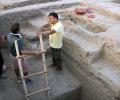
Archaeological explorations in Topra Kalan village, Yamunanagar district, Haryana, have revealed ancient remains and cultural artifacts, suggesting human habitation dating back approximately 3,500 years. The findings include Painted Grey Ware (PGW) and other ancient materials, with further investigations planned to determine the exact age and significance of the site.
The ASI, which was to submit the report of the survey by October 6, now has time till November 6 to do so.
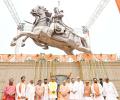
Gond also claimed that the Dargah premises was the meditation site of Maharaja Suheldev's guru, Rishi Balark.
Jain told reporters that copies of the survey report consisting of 839 pages were made available to the parties concerned by the court late Thursday evening.

After hearing arguments in the matter, Chief Justice Pritinker Diwaker posted it for further hearing on Wednesday.
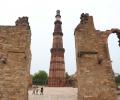
The Archaeological Survey of India informed the JPC that 280 protected monuments have been listed as Waqf properties.
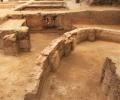
'Archaeological sites like Keeladi, having remained buried for 2,500 years, have come out and speak now.'
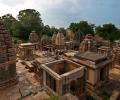
'If at all human beings require a religion, the future religion will be Hinduism.'

The ASI told the court on November 2 that it might take some more time to compile the report, along with the details of the equipment used in the survey work, following which additional time till November 17 was granted for the submission of the document.
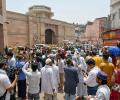
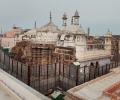
District judge A K Vishvesh on Friday directed the ASI to conduct a detailed scientific survey -- including excavations, wherever necessary -- to determine if the mosque in Varanasi in Uttar Pradesh is built upon a temple.

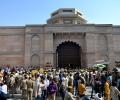
Peace prevailed at the disputed 11th-century Bhojshala-Kamal Maula Mosque complex in Madhya Pradesh's Dhar district on Friday as Hindus performed puja to mark Basant Panchami festival while Muslims offered namaaz within the same premises but at a different location.
Mishra said that the court has fixed July 7 for the next hearing.
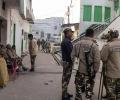
A four-member team from the Archaeological Survey of India (ASI) conducted a survey of the recently-discovered Shri Kartik Mahadev temple, five pilgrimage sites, and 19 wells in Sambhal, Uttar Pradesh, India. The survey followed the discovery of three damaged idols inside a well of the Bhasma Shankar temple, which was reopened after being shut for 46 years. The Shri Kartik Mahadev temple, also known as the Bhasma Shankar temple, was reopened on December 13 after authorities found the covered structure during an anti-encroachment drive. The temple houses an idol of Lord Hanuman and a Shivling and had remained locked since 1978. The district administration has requested carbon dating of the temple, including the well, from the ASI. Meanwhile, the Supreme Court has restrained courts across India from entertaining new lawsuits or passing any orders in pending ones seeking to reclaim religious places, especially mosques and dargahs, until further notice. This action halts proceedings in approximately 18 lawsuits filed by Hindu parties seeking surveys to determine the original religious character of 10 mosques, including the Gyanvapi at Varanasi, the Shahi Idgah Masjid at Mathura, and the Shahi Jama Masjid at Sambhal, where four individuals died in clashes. The Supreme Court will examine the legality, scope, and boundaries of the Places of Worship (Special Provisions) Act, 1991, which prohibits the conversion of places of worship and ensures the preservation of their religious character as it existed on August 15, 1947.

A BJP leader from Ayodhya has filed a complaint seeking a ban on the film 'The Taj Story,' claiming it's based on his high court petition regarding the Taj Mahal.
A BJP leader from Ayodhya has filed a complaint seeking a ban on the film 'The Taj Story,' claiming it's based on his high court petition regarding the Taj Mahal.

A 30-member Archaeological Survey of India team halted a survey here of the Gyanvapi mosque -- just hours after beginning the exercise Monday morning -- following a Supreme Court order.

The Anjuman Intezamia Committee Thursday filed a counter-affidavit before the Allahabad HC in the matter seeking a survey of the Wazukhana (or ablution area) by the ASI.

The Smithsonian will return three ancient bronze sculptures to India after evidence showed they were illegally removed from Tamil Nadu temples in the 1950s

A purported video of a submerged garden on the premises of the ivory-white marble mausoleum was doing the rounds on social media since Thursday after heavy rains.

A bench comprising Chief Justice D Y Chandrachud and Justices J B Pardiwala and Manoj Misra asked the ASI not to take recourse to any invasive act during the survey.

Days after the district court ruled that a priest can perform prayers in a cellar of the Gyanvapi mosque in Varanasi, a petitioner on Monday filled a plea seeking an ASI survey of all other closed basements in the complex.

BJP's Satara MP Udayanraje Bhosale, a descendant of Maratha king Chhatrapati Shivaji Maharaj, had sought the removal of Aurangzeb's tomb located in Chhatrapati Sambhajinagar district.
The Shiv Sena, a ruling party in Maharashtra, has demanded the removal of the protected monument status from Aurangzeb's tomb in Khultabad. This demand comes after protests and calls for the tomb's demolition from organizations like the Bajrang Dal and Vishwa Hindu Parishad. The Archaeological Survey of India (ASI) protects the tomb as a monument of national importance. Maharashtra Chief Minister Devendra Fadnavis has stated that the state government will protect the tomb but will not allow the glorification of Aurangzeb.

The blue-coloured ASI board, currently kept at the Satyavrat police outpost, is expected to be installed soon, replacing the older sign that bore the name "Shahi Jama Masjid."

Muslim body Anjuman Intezamia Masjid committee on Thursday moved the Supreme Court against the Allahabad high court order permitting an Archaeological Survey of India (ASI) survey at the Gyanvapi mosque.
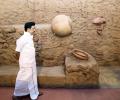
'There is no doubt about the antiquity of Tamil Nadu.'

'My colleague Naveen Bamel -- he is an advocate of the Supreme Court -- went to the museum at the Red Fort specifically to look for the cap.' 'He inquired with the ASI officials there, and nobody had a clue.' 'So I thought this is not right. This must be brought to the notice of the prime minister.'
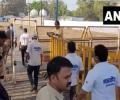
The security has been stepped up in view of the Friday prayers to be offered by the Muslim community members at the site, a police official said.
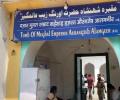
The Republican Party of India-Athawale leader said that removing Aurangzeb's tomb would not solve anything.
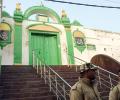
The Allahabad high court on Friday directed the Archaeological Survey of India (ASI) to clean the premises of Jama Masjid in Sambhal but did not pass an order for whitewashing of the mosque.

Sacred spots and soaring peaks: Bucket-listing across the heartland. Roopa Unnikrishnan and her father journey through the heart of India.
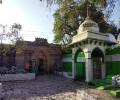
However, a division bench of Justices SA Dharmadhikari and Gajendra Singh made it clear the ASI won't be given any more time at the end of this 8-week period.
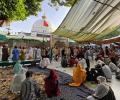
A local court in Ajmer has ordered notices to be issued to three parties in a civil suit claiming the existence of a Shiva temple within the dargah of Sufi saint Moinuddin Chishti. The suit, filed in September, seeks directions to resume worship at the alleged temple. The court has issued notices to the Ajmer Dargah Committee, Ministry of Minority Affairs, and the Archaeological Survey of India. The next hearing is scheduled for December 20.
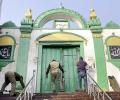
The Sambhal administration in Uttar Pradesh has stated that no work should be carried out on the Shahi Jama Masjid without the approval of the Archaeological Survey of India (ASI). This decision comes after the mosque's management committee sought permission to redecorate the mosque ahead of Ramzan. The matter is currently pending in court, and the property belongs to the ASI. The administration has emphasized that no tampering with the mosque is allowed until the ASI grants permission.

Three people were killed and scores of others, including around 20 security personnel and four personnel of the administration, were injured as protesters opposing a court-ordered survey of a Mughal-era mosque in Sambhal, Uttar Pradesh clashed with police on Sunday.
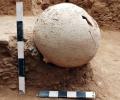
'At Keeladi, we have not come across any evidence for organised religion.'
According to the counsel for the Hindu side Madan Mohan Yadav, the ASI sought more time due to non-availability of the technical report.
The Archaeological Survey of India (ASI) on Monday submitted its scientific survey report of the disputed Bhojshala-Kamal-Maula mosque complex to the Indore bench of the Madhya Pradesh high court.
The Maharashtra Navnirman Sena (MNS) has demanded the removal of decorations and installation of CCTV surveillance at the tomb of Mughal emperor Aurangzeb in Chhatrapati Sambhajinagar district, Maharashtra. The party also wants a board to be installed at the site stating that Aurangzeb was buried there after trying to "finish" the Marathas. The demands come amid a push by right-wing outfits to remove the tomb. The MNS's memorandum comes amid demand by right-wing outfits to remove Aurangazeb's tomb. Chief Minister Devendra Fadnavis said whether people like the Mughal emperor or not, his tomb is a protected monument, but his glorification will not be allowed.

Hindus will offer prayers from sunrise to sunset on Basant Panchami while Muslims to offer namaz from 1 pm to 3 pm on Friday.
